Why Most Iron Supplements Don’t Work (And What Actually Gets Absorbed)
by Dr Duncan Rozario If you’ve been told to take iron but still […]
by Dr Duncan Rozario
I’m Dr. Duncan Rozario, a general surgeon in Oakville, Ontario, and proud to be the Chief Medical Officer of Sigma Life Sciences. Today, I want to talk about a breakthrough in the way we treat patients with iron deficiency and iron deficiency anemia.
Medicine advances in watershed moments, Jenner’s vaccination, Banting’s insulin, Fleming’s penicillin. Each of these discoveries forever changed the way we care and cure.
I believe we are at the start of another such moment. This one addresses a condition that affects more people than cancer, more people than diabetes, and more people than heart disease.
“If you ask Google or any AI, ‘What is the most common health problem in the world?’, the answer is the same: iron deficiency.”

Iron Deficiency: The Most Common Health Problem in the World
If you ask Google — or any modern AI — “What is the most common health problem in the world?”, the answer is consistent:
Iron deficiency.
Nearly two billion people suffer its effects. Here in Canada, an estimated 38% of women of reproductive age are iron deficient. Just pause on that number for a moment: 38%.
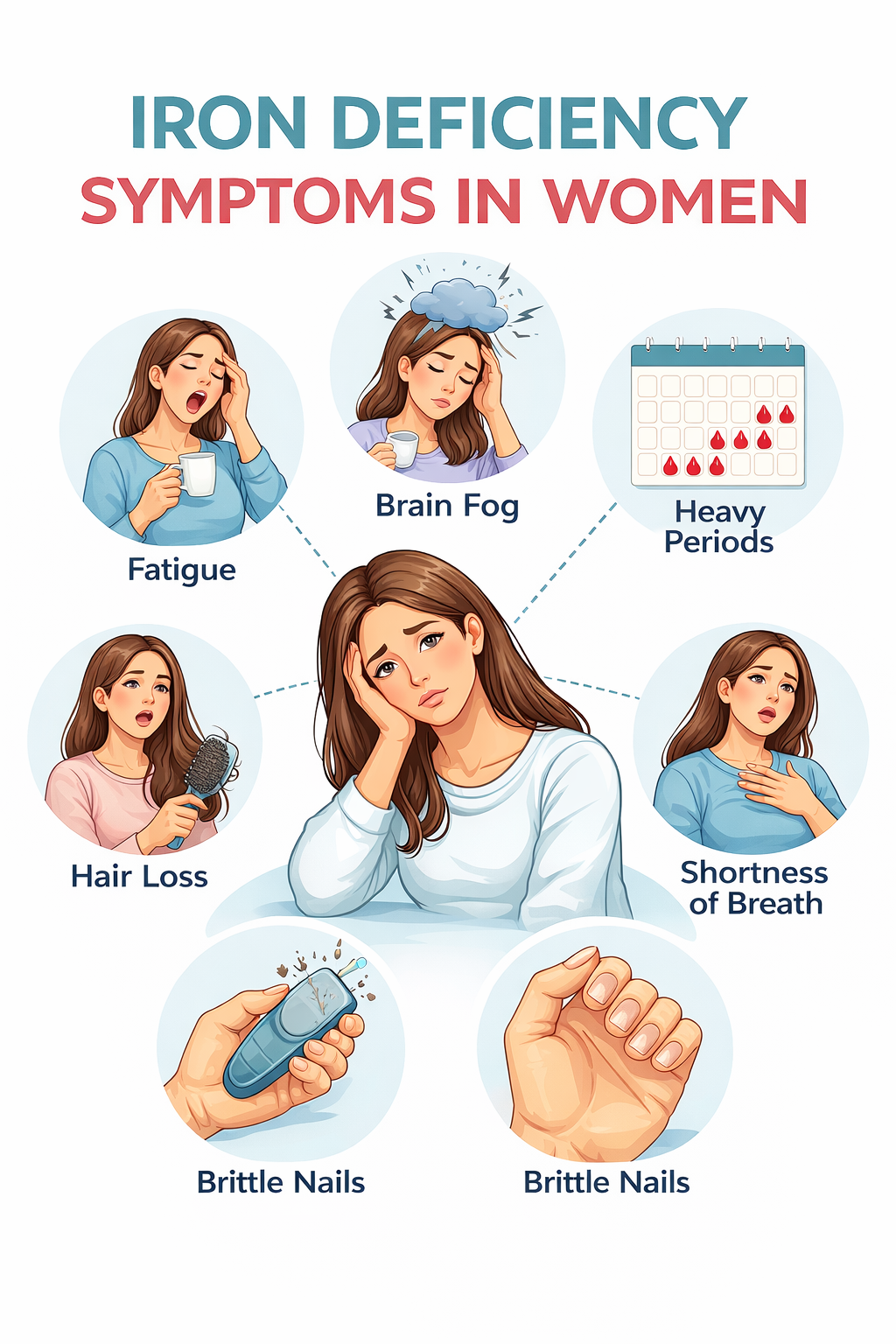
The consequences are profound:
These are not simply inconveniences. They affect how children learn, how adults work, how parents care for their families, and how patients recover from illness and surgery. They diminish quality of life and quietly erode potential.
Yet, too often, these symptoms are brushed aside as “stress,” “being busy,” or “just getting older.”
“Normal” Bloodwork, But Far From Well
I’ll never forget one of my patients, a mother recovering from breast cancer. She told me she was always exhausted, always foggy, always pushing through. On paper, her hemoglobin looked fine. At first glance, she was “normal.”
But when we checked her ferritin, the body’s iron storage marker, it was nearly zero.
She wasn’t irritable, or depressed, or simply tired — she was iron deficient.
And like so many others, she had been taught to normalize her suffering.
“Her hemoglobin was ‘normal,’ but her ferritin was nearly zero. She wasn’t just tired — she was iron deficient.”
Her story is not unique. It reflects a much larger problem:
Why Traditional Iron Treatments Fail
The tragedy is that our current therapies often don’t do what our patients need them to do.
Oral Iron: Effective on Paper, Intolerable in Practice
Conventional oral iron supplements are the most common treatment for iron deficiency. But they are:
It doesn’t matter how effective a therapy looks in a clinical trial if patients cannot or will not take it consistently in real life.
Intravenous Iron: Powerful but Limited
Intravenous (IV) iron can be very effective, but:
So we are left with an enormous global burden of iron deficiency, but limited practical tools that patients can actually use and tolerate over time.
A Different Question: Can We Work With Biology Instead of Against It?
This is where the team at PharmaNutra made a revolutionary leap.
They asked a simple but profound question:
What if, instead of fighting the body’s natural barriers to iron absorption, we worked with them?
Their answer was Sucrosomial® technology.
What Is Sucrosomial® Iron?
Sucrosomial® technology encapsulates iron pyrophosphate in a protective matrix of phospholipids and sucresters. This structure:
In practical terms, Sucrosomial® iron is designed to make iron therapy:
“Instead of forcing iron through the same pathway that causes side effects, Sucrosomial® technology allows iron to slip past the usual barriers and be absorbed more gently and efficiently.”
Iron Deficiency Is Everywhere: A Surgeon’s Perspective
As a general surgeon, I see iron deficiency across a wide spectrum of patients:
My colleagues see the same pattern:
Iron deficiency is everywhere — in every specialty, every clinic, and every community.
Imagine an Oral Iron Patients Actually Want to Take
Now imagine this:
That is the promise of Sucrosomial® technology.
“Imagine correcting iron deficiency early — gently, effectively, and without the side effects that have made so many patients give up on iron.”
Introducing SiderAL®: Canada’s First Sucrosomial® Iron
That is why I was so excited when I first learned about this innovation — and why Sigma Life Sciences is proud to introduce Canada’s first Sucrosomial® iron product: SiderAL®.
SiderAL® delivers nano-particles of iron pyrophosphate encapsulated in a Sucrosomial® structure, designed for:
I truly believe this represents a watershed moment in the treatment of iron deficiency and iron deficiency anemia in Canada.
The Path Forward: No One Should Normalize Iron Deficiency
Iron deficiency is not rare.
It is not harmless.
And it is not something Canadians should simply “live with.”
For the first time, we have an oral iron option that is designed to be:
At Sigma Life Sciences, our mission is to ensure that every patient, from young women to seniors, from surgical and oncology patients to athletes and new mothers has access to the best iron therapy available.
“No one should struggle in silence with a condition that is both identifiable and treatable.”
The era of Sucrosomial® iron has begun. Its impact will be felt in every specialty, every clinic, and every community across Canada.
If you or your patients struggle with low energy, brain fog, or unexplained fatigue, testing iron levels, especially ferritin is one of the most powerful first steps you can take.
If you think you may have iron deficiency, speak with your healthcare professional about appropriate testing and treatment options.
Dr. Duncan Rozario is a practicing physician and serves as Chief Medical Officer for Sigma Life Sciences, the Canadian distributor of SiderAL® Sucrosomial® Iron.