Iron Deficiency Hair Loss: Causes, Diagnosis, and How to Regrow Hair (2026 Guide)
by Dr Duncan Rozario Hair loss is one of the most distressing—and often […]
By Dr. Duncan Rozario, Chief Medical Officer, Sigma Life Sciences
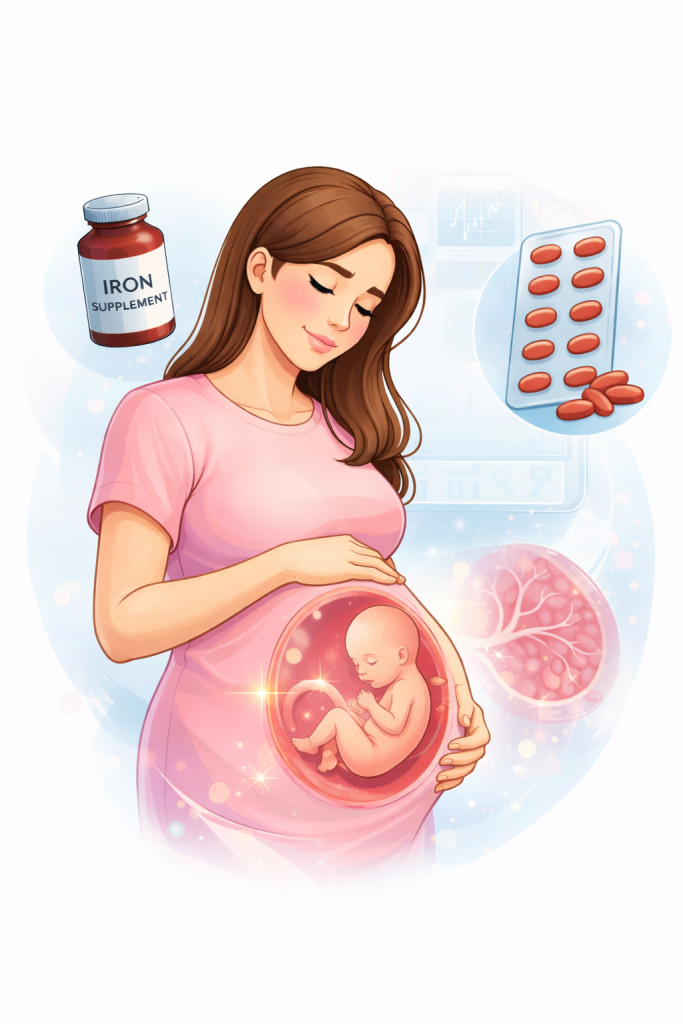
Pregnancy demands more iron. The wrong supplement can leave you exhausted—despite doing everything right.
Iron is not just another supplement in pregnancy—it is foundational.
It supports:
And yet, iron deficiency is extraordinarily common.
According to a major Canadian review :
👉 This is not a niche issue.
👉 It is one of the most important—and under-treated—conditions in pregnancy.
Most women are told to “take iron.”
Few are told:
👉 Which iron actually works
👉 Which iron they can tolerate
As outlined in both clinical practice and the CMAJ review:
This is exactly what we explore in:
👉 “Why Most Iron Supplements Don’t Work (And What Actually Gets Absorbed)”
Pregnancy already predisposes to:
Adding traditional iron often makes this worse.
👉 Many women stop taking it
👉 Iron deficiency persists
The best iron supplement is not simply the strongest.
It is the one that:
Iron must actually enter the bloodstream.
If a patient cannot take it consistently, it does not work.
Iron repletion in pregnancy requires months, not days.
Inflammation, hormones, and GI changes all affect absorption.
The CMAJ guideline confirms:
It also highlights a critical reality:
👉 Many patients cannot tolerate standard oral iron
And importantly:
Most recommendations assume all oral iron behaves similarly.
They do not.
Newer formulations, such as Sucrosomial® iron, are designed to:
SiderAL® is an advanced oral iron designed for:
In practical terms:
👉 Better tolerated iron = better adherence
👉 Better adherence = better outcomes
This aligns with a key principle emphasized in the CMAJ review:
The best iron therapy is the one that patients can take consistently
If you’re trying to decide:
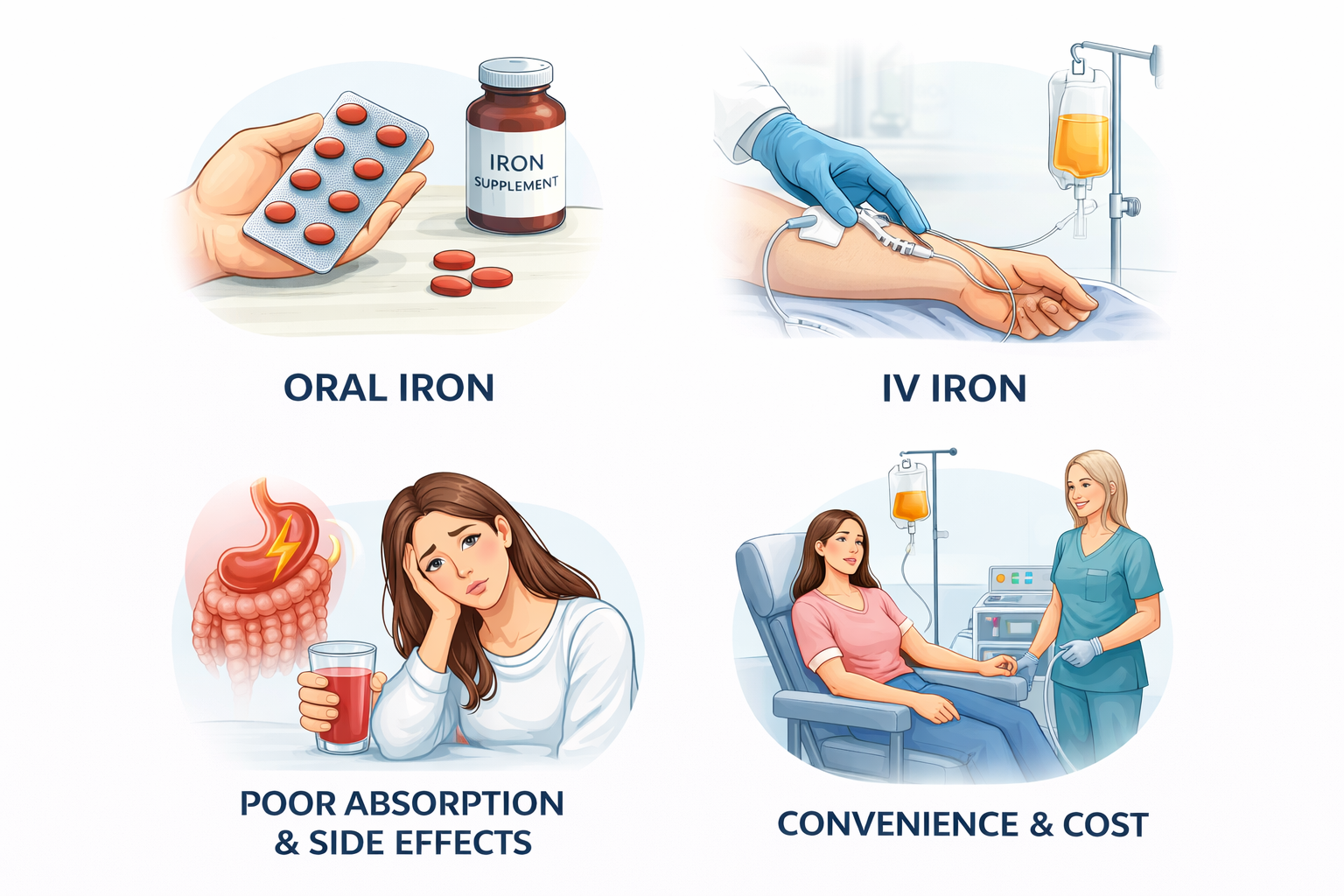
👉 Read: “Oral Iron vs IV Iron: What Patients Need to Know”
| Situation | Best Approach |
|---|---|
| Mild deficiency | Optimized oral iron |
| GI intolerance | Advanced oral iron |
| Severe anemia | IV iron |
| Malabsorption | IV iron or advanced oral iron |
Many women assume their iron is working.
Often, it isn’t.
👉 Read:
“When I Take SiderAL®, My Hemoglobin Rises but My Ferritin Does Not. Why?”
Iron deficiency does not always present as anemia.
You may experience:
👉 See:
“Iron Deficiency Symptoms in Women: What’s Often Missed”
We are entering a new phase in iron therapy.
As described in:
👉 “A Watershed Moment in Treating Iron Deficiency”
The shift is from:
Prescribing iron
To:
Prescribing iron that actually works
The question is not:
What is the cheapest iron supplement?
Or even:
What is the strongest iron supplement?
It is:
What iron will this patient actually take—and benefit from—throughout pregnancy?
Because in pregnancy:
👉 Consistency matters more than potency
👉 Tolerability matters more than theory
To better understand iron deficiency and treatment:
Or visit SiderALIron.ca to explore advanced oral iron options.
The best iron supplement is one that is:
Newer formulations, such as Sucrosomial® iron, are designed to meet these criteria.
Traditional iron irritates the gastrointestinal tract and slows motility—an effect amplified by pregnancy hormones.
Total iron requirements approach ~1000 mg over pregnancy
No. Even a high-iron diet is insufficient to meet pregnancy demands
Yes. Iron supplementation is standard of care and essential for maternal and fetal health.
References:
Sholzberg, Michelle, Christopher Hillis, Mark Crowther, and Rita Selby. “Diagnosis and Management of Iron Deficiency in Females.” Canadian Medical Association Journal 197, no. 24 (2025): E680–E687. https://doi.org/10.1503/cmaj.240570.
Pavord S, Daru J, Prasannan N, Robinson S, Stanworth S, Girling J; BSH Committee. UK guidelines on the management of iron deficiency in pregnancy. Br J Haematol. 2020 Mar;188(6):819-830. doi: 10.1111/bjh.16221. Epub 2019 Oct 2. PMID: 31578718.
If you think you may have iron deficiency, speak with your healthcare professional about appropriate testing and treatment options.
Dr. Duncan Rozario is a practicing physician and serves as Chief Medical Officer for Sigma Life Sciences, the Canadian distributor of SiderAL® Sucrosomial® Iron.