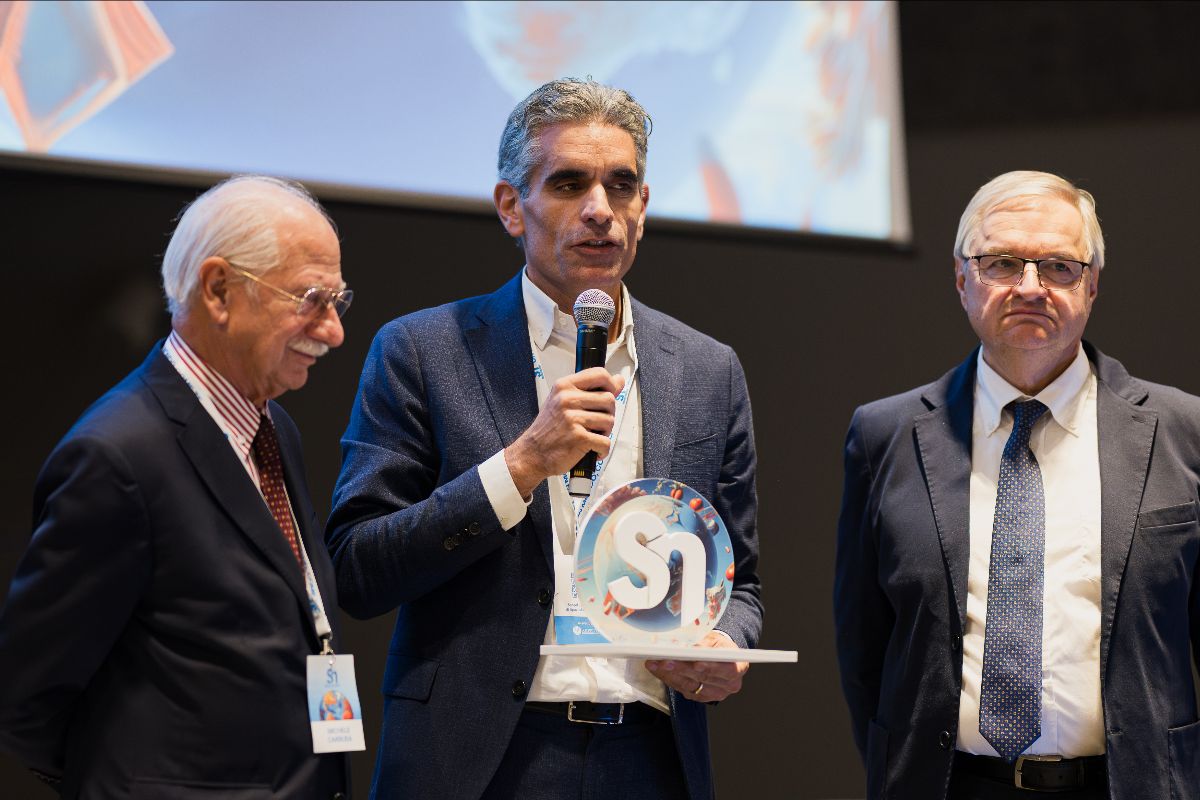
SiderAL® Forte recognised as Best Nutraceutical Product
The Spazio Nutrizione 2025 Partner Award celebrates Pharmanutra’s innovation and leadership in nutraceutical […]
by Dr Duncan Rozario, Chief Medical Officer, Sigma Life Sciences
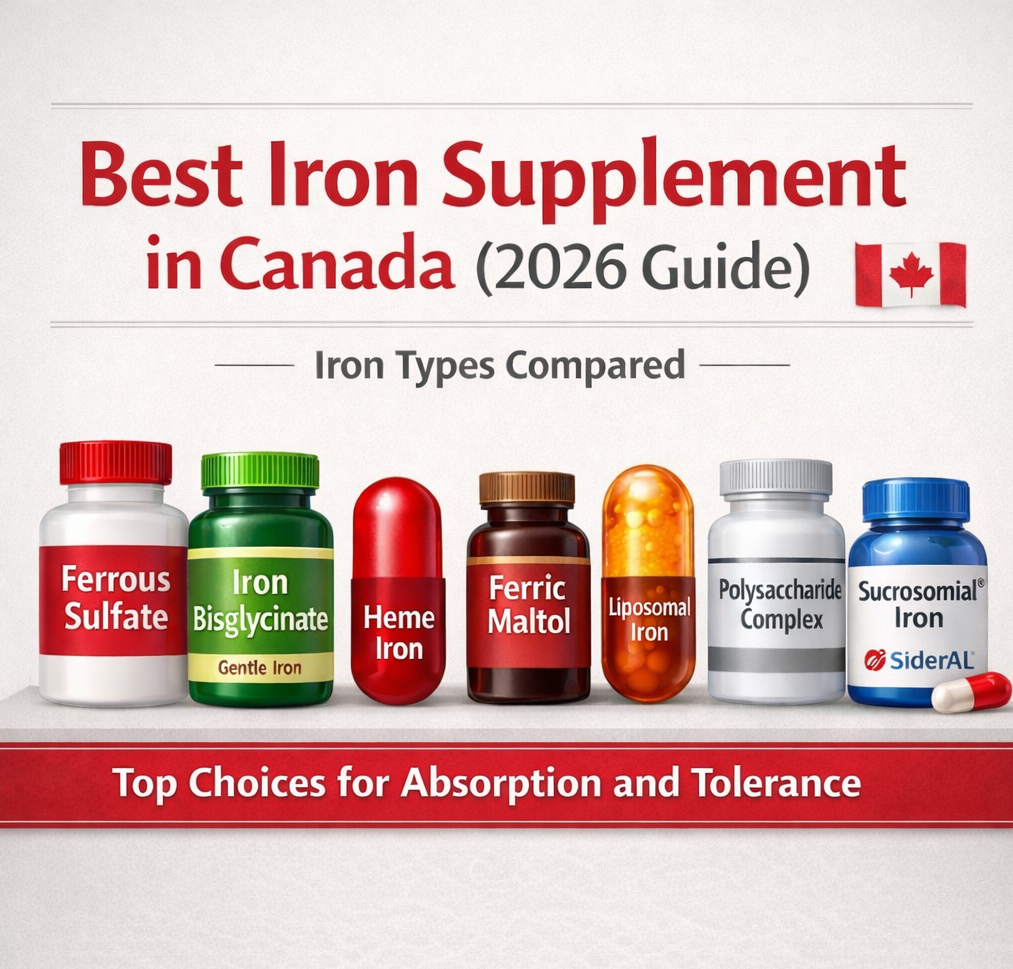
(2026 Guide): Comparing Every Oral Iron Option
Looking for the best iron supplement in Canada? Compare ferrous sulfate, bisglycinate, heme iron, ferric maltol, liposomal iron, and sucrosomial iron in this 2026 guide.
What is the best iron supplement in Canada?
For most adults with iron deficiency, the best oral iron supplement is the one that combines high absorption, good tolerability, and consistent adherence. Traditional iron salts such as ferrous sulfate are inexpensive but often cause gastrointestinal side effects. Newer options such as iron bisglycinate, heme iron, liposomal iron, ferric maltol, and sucrosomial iron may be better tolerated and, in some cases, better absorbed.
If you are trying to choose the best iron supplement in Canada in 2026, this guide reviews the main oral iron types, how they compare, and which patients may benefit most from each.
There is no single best iron supplement for every person.
In general:
The best choice depends on:
Many people assume iron is just iron. It is not.
Different oral iron supplements vary in:
That matters because the best iron supplement is not just the strongest one on paper. It is the one you can absorb and keep taking long enough to correct deficiency.
For background, see our other articles:
This is the oldest and most commonly recommended category.
Examples include:
Ferrous salts are inexpensive, widely available, and can work well in patients who tolerate them.
They are also the most likely to cause:
For many patients, the problem is not that ferrous salts cannot work. It is that they are difficult to stay on.
Iron bisglycinate is often sold as a “gentle iron” option.
It is generally better tolerated than ferrous sulfate and may be easier for patients who have experienced gastrointestinal side effects with traditional iron.
Although it is gentler, it still relies on more conventional absorption pathways and may not be ideal for every patient with more significant deficiency. It has limited absorption.
Iron bisglycinate is often a reasonable option for:
Heme iron is derived from animal sources, typically from cows, and is absorbed differently from standard non-heme iron.
Heme iron is often promoted for:
It may be more expensive, less common, and sometimes lower in practical dose strength for people with more substantial deficiency. May not be suitable for patients on vegetarian diets.
Heme iron may work well for:
These include products designed to reduce irritation by binding iron to larger complexes.
Examples may include:
These formulations are often marketed as gentler than traditional iron salts.
Absorption and response can be variable, and they are not always the most efficient option for correcting more meaningful deficiency. They also tend to be more expensive. They are absorbed as conventional iron and have those related limitations.
These may suit patients prioritizing tolerability over speed of correction.
Ferric maltol is a newer oral iron formulation used in some clinical settings.
It is designed to improve tolerability while still delivering iron effectively.
It may be more expensive and is not necessarily the first option for every patient. It cannot be used in patient with inflammatory bowel disease.
Ferric maltol may be considered in selected patients, particularly when standard oral iron has not worked or has not been tolerated.
‘Liposomal’ iron claims to coat iron in a lipid-based carrier. Real liposomes are liquid, so the name used is not correct.
It claims to:
It is often more expensive than standard iron salts.
There is virtually no medical data that shows that they are effective. The manufacturers of ‘liposomal’ iron products use clinical data from Sucrosomial® iron trials.
Liposomal iron may be useful for:
Sucrosomial® iron is another advanced oral iron formulation designed to improve absorption and tolerability.
It is positioned as:
Cost is usually higher than traditional ferrous salts.
Sucrosomial iron may be especially relevant for:
| Type of iron | Absorption | GI side effects | Cost | Best for |
|---|---|---|---|---|
| Ferrous sulfate / salts | Low | Higher | Low | Budget-conscious patients |
| Iron bisglycinate | Moderate | Lower | Moderate | Sensitive stomach, mild deficiency |
| Heme iron | Moderate | Low | Higher | Better absorption, mild to moderate deficiency |
| Polysaccharide / protein-bound iron | Variable | Lower | Moderate | Tolerability-focused users |
| Ferric maltol | Moderate | Moderate to low | Higher | Selected patients needing newer options |
| Liposomal iron | variable, unknown | unknown | Higher | Patients who failed traditional iron |
| Sucrosomial iron | Highest | Very low | Higher | Patients seeking high absorption and good tolerability |
Iron bisglycinate, liposomal iron, heme iron, and sucrosomial iron are often better tolerated than ferrous sulfate.
The right choice depends on how low ferritin is, whether anemia is present, and whether standard oral iron has already failed.
Women with iron deficiency often need a product they can tolerate for weeks to months, which makes adherence just as important as dose strength.
Pregnancy requires a separate discussion because tolerance, folate needs, and physician guidance matter. Internally link here to:
A switch to bisglycinate, heme iron, liposomal iron, ferric maltol, or sucrosomial iron may be worth considering depending on the clinical scenario.
Ask these five questions:
A supplement should match a real need, ideally guided by ferritin, hemoglobin, transferrin saturation, or physician advice.
If ferrous sulfate caused constipation or nausea, it may be more useful to change formulation than to keep forcing the same product.
Mild depletion and iron deficiency anemia are not always managed the same way.
Absorption issues matter. A newer formulation may be more appropriate.
The best supplement is one you can take consistently.
Oral iron may not be sufficient if you have:
This is where your internal link to:
For most readers, the honest answer is this:
The best iron supplement in Canada is not simply the cheapest or the strongest. It is the one that best matches the patient’s absorption needs, tolerability, and likelihood of staying on treatment.
The best iron supplement in Canada depends on tolerability, absorption, and severity of deficiency. Ferrous sulfate is the most affordable option, while iron bisglycinate, heme iron, liposomal iron, ferric maltol, and sucrosomial iron may offer better tolerability or absorption for some patients.
The most absorbable oral iron options generally include heme iron and newer formulations such as liposomal iron and sucrosomial iron, though the best choice depends on the patient’s condition and tolerance.
Iron bisglycinate, heme iron, liposomal iron, and sucrosomial iron are often better tolerated than ferrous sulfate and may cause less constipation in some patients.
The best iron supplement in Canada depends on your iron levels, symptoms, and tolerance. Ferrous sulfate is widely used, while newer options such as bisglycinate, heme iron, liposomal iron, ferric maltol, and sucrosomial iron may be better tolerated.
Iron bisglycinate, heme iron, liposomal iron, and sucrosomial iron are often promoted as gentler options than traditional ferrous sulfate.
Heme iron uses a different absorption pathway and may be better absorbed in some patients, but it is not automatically the best choice for everyone.
Both are newer formulations designed to improve tolerability and absorption, but they use different delivery systems.
IV iron may be considered when oral iron is not tolerated, not absorbed well, or when faster correction is needed.
If you think you may have iron deficiency, speak with your healthcare professional about appropriate testing and treatment options.
References:
Sholzberg, Michelle, Christopher Hillis, Mark Crowther, and Rita Selby. “Diagnosis and Management of Iron Deficiency in Females.” Canadian Medical Association Journal 197, no. 24 (2025): E680–E687. https://doi.org/10.1503/cmaj.240570.
Gómez-Ramírez S, Brilli E, Tarantino G, Muñoz M. Sucrosomial® Iron: An Updated Review of Its Clinical Efficacy for the Treatment of Iron Deficiency.
Pharmaceuticals (Basel). 2023;16(6):847. PMID: 37375794.
Dr. Duncan Rozario is a practicing physician and serves as Chief Medical Officer for Sigma Life Sciences, the Canadian distributor of SiderAL® Sucrosomial® Iron.