“I would write ‘iron deficiency’ on my arm in Sharpie every day when I went out into the world.”
Those are among the first words in an outstanding recent Vancouver Sun feature on iron deficiency written by Valentina Barrera Arguello. The article tells the stories of Canadians whose lives have been profoundly affected by iron deficiency and iron deficiency anaemia—often for years before receiving an accurate diagnosis.
At SiderAL Canada, we spend much of our time discussing ferritin levels, haemoglobin, iron absorption and clinical studies. But sometimes statistics don’t capture what patients actually experience.
This article does.
If you haven’t already read it, we strongly encourage you to do so. It is one of the most thoughtful pieces on iron deficiency published in the Canadian media in recent years.
Iron deficiency is incredibly common—and frequently overlooked
The Vancouver Sun article highlights something hematologists have known for years: iron deficiency is common, especially among women of reproductive age, yet many patients spend years living with symptoms before receiving appropriate investigation or treatment.
Iron deficiency may occur because of:
- Heavy menstrual bleeding
- Pregnancy
- Gastrointestinal blood loss
- Inflammatory bowel disease
- Bariatric surgery
- Vegetarian or vegan diets
- Malabsorption
- Frequent blood donation
- Endurance athletics
Importantly, iron deficiency can cause symptoms even before anaemia develops.
Many people assume that unless their haemoglobin is low, iron cannot be the problem.
That simply isn’t true.
“Maybe I’m just lazy…”
One of the most striking themes throughout the article is how patients gradually begin blaming themselves.
Many describe years of:
- overwhelming fatigue
- brain fog
- poor concentration
- shortness of breath
- reduced exercise tolerance
- dizziness
- heart palpitations
Rather than recognizing these as symptoms of iron deficiency, patients often conclude they are simply getting older, becoming less fit, or even becoming lazy.
As hematologist Dr. Wendy Davis notes in the article, iron deficiency can exist long before anaemia develops, and patients may still experience significant symptoms.
Ferritin matters
The article also emphasizes an important concept that has become increasingly recognized in modern medicine:
Ferritin is often a better marker of iron stores than haemoglobin alone.
Someone may have:
- normal haemoglobin
- normal red blood cell count
yet still have depleted iron stores and experience significant symptoms.
Recent Canadian guidance recommends investigating and treating iron deficiency, even without anaemia, when appropriate.
Traditional oral iron doesn’t work for everyone
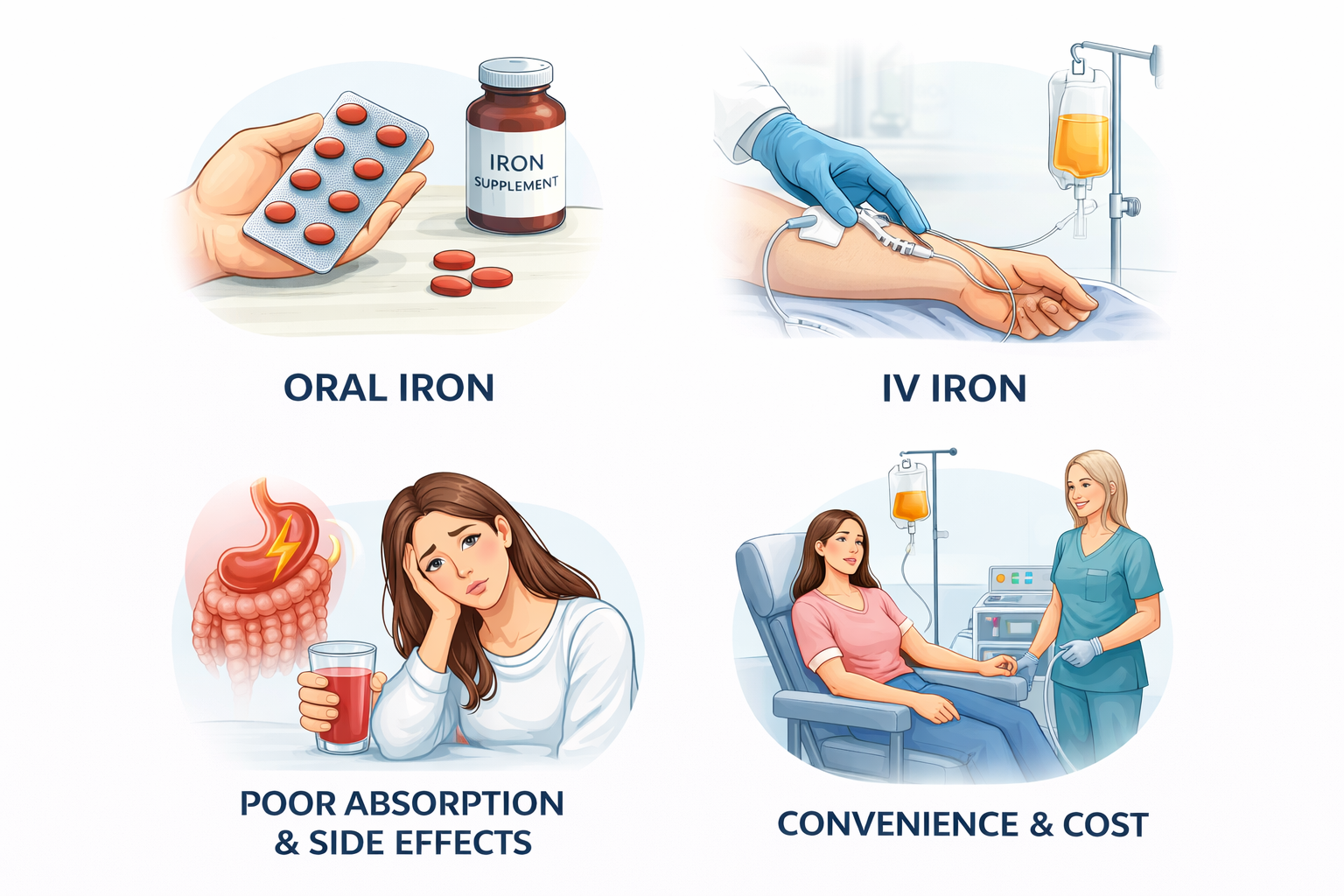
For decades, the standard first-line treatment has been oral iron salts.
Unfortunately, many patients struggle with:
- constipation
- nausea
- abdominal discomfort
- metallic taste
- poor adherence
The Vancouver Sun article accurately describes how these gastrointestinal side effects often lead patients to stop treatment or continually switch between products without successfully replenishing their iron stores.
For some patients, intravenous iron becomes necessary, particularly when rapid replacement is required or oral therapy has failed.
Newer oral iron options are changing the conversation
Fortunately, oral iron supplementation has evolved.
Sucrosomial® Iron (marketed in Canada as SiderAL®) was developed to address one of the biggest limitations of conventional oral iron: gastrointestinal intolerance.
Unlike traditional ferrous salts, SiderAL® uses Sucrosomial® technology, which protects the iron during its passage through the stomach and facilitates absorption through alternative intestinal pathways. This unique delivery system has been studied in numerous clinical trials across a wide range of patient populations.
Clinical studies have demonstrated that SiderAL® can effectively improve iron status while being associated with excellent gastrointestinal tolerability compared with conventional oral iron preparations.
For many patients who previously believed they “couldn’t tolerate iron,” newer formulations may offer another option before progressing to intravenous therapy.
Iron deficiency deserves to be taken seriously
Perhaps the most important message from the Vancouver Sun article is that iron deficiency is not simply feeling a little tired.
Untreated iron deficiency can affect:
- quality of life
- work productivity
- cognitive function
- pregnancy outcomes
- exercise performance
- emotional well-being
The stories shared by patients throughout the article remind us that the impact extends far beyond laboratory values.
Read the original article
We congratulate Valentina Barrera Arguello for bringing much-needed attention to this often-overlooked condition, and we encourage everyone interested in women’s health, pregnancy, nutrition and iron deficiency to read the original Vancouver Sun feature.
Greater awareness leads to earlier diagnosis, better treatment, and ultimately better patient outcomes.
References
Barrera Arguello V. The little-discussed health issue that is taking a mental and financial toll on thousands in B.C. Vancouver Sun. June 29, 2026.